Is the world getting better or worse? And why does it matter?
It’s easy to think the world is getting worse and worse by the day, when in fact it's better then ever.
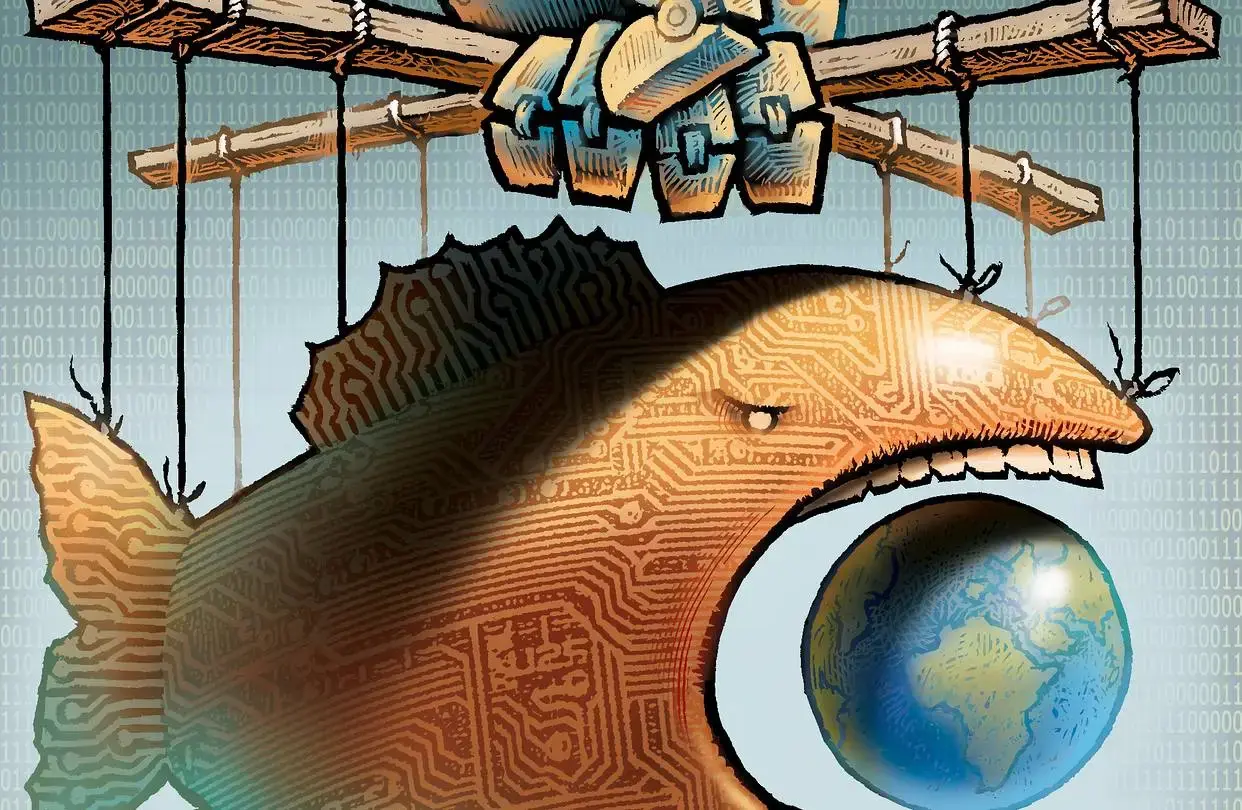
It’s easy to think the world is getting worse and worse by the day. Just watch the news or any other current affairs program in the media.
The media focuses on “newsworthy” events, and these events are usually bad: plane crashes, wars, natural disasters, and crime. Positive developments, on the other hand, happen very slowly and seldom make the headlines in the event-obsessed media. And so we develop a distorted sense of reality, such as our perception of world poverty:
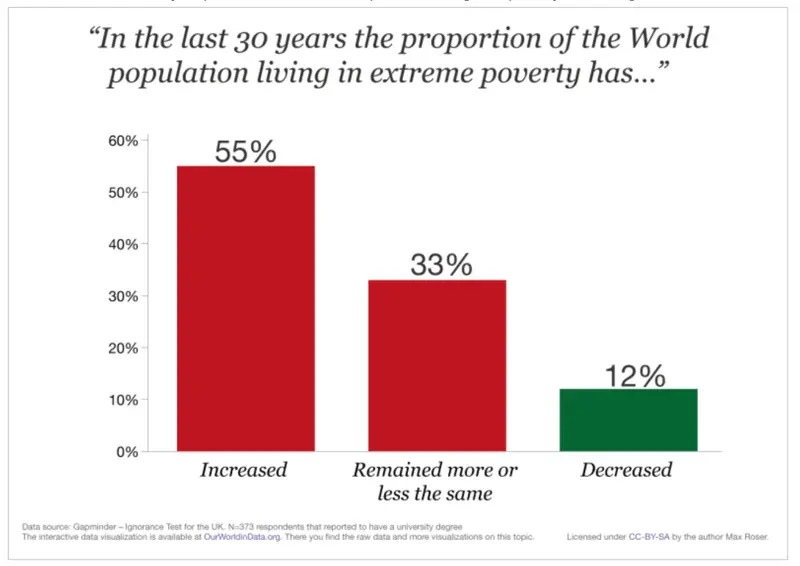
World poverty is the lowest ever
In reality, world poverty is at the lowest point in human history, a fact only 12% of people got right. Here is the real picture when it comes to world poverty:
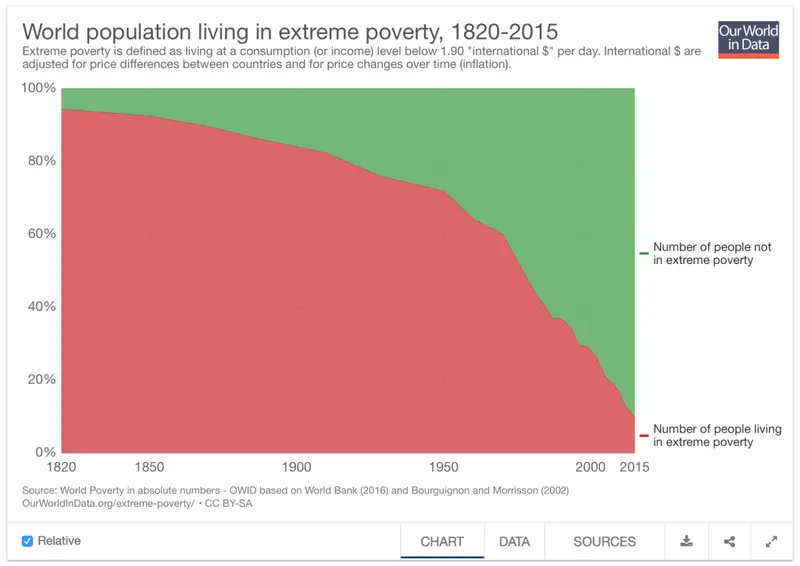
Across the board, in matters of mortality, disease, and quality of life, life is getting better and better for billions of people. Our World In Data has a whole heap of graphs that illustrate how the world today is healthier, richer, and better educated.
The impact of this on our everyday lives is more obvious (in a subtle sort of way) when it comes to our perception of “safety and violence”. There is a widespread perception that our world is unsafe and more violent than ever before. As a consequence of this, we literally live our day-to-day lives in fear. Fear of terrorism, fear of crime, fear for the safety of our children, fear of depression, disease, destruction, and death.
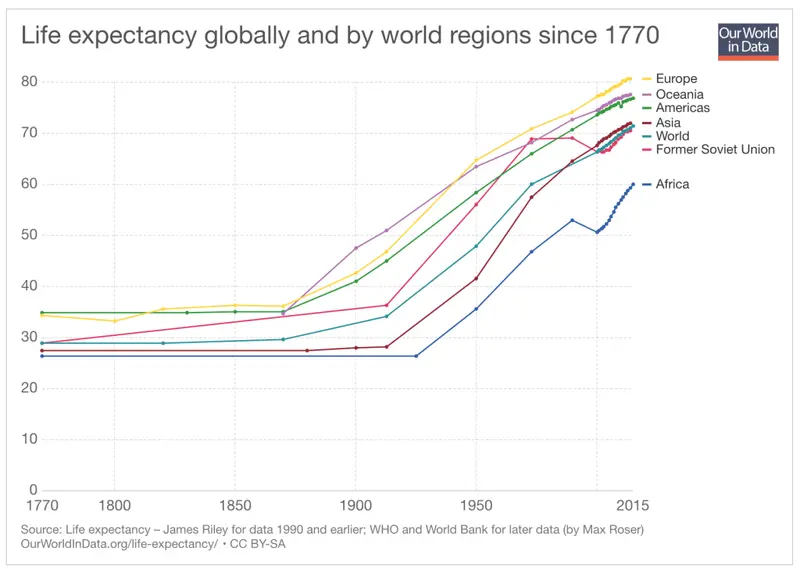
We are living longer than ever
In reality, we are living longer than human beings have ever lived on the face of the planet:
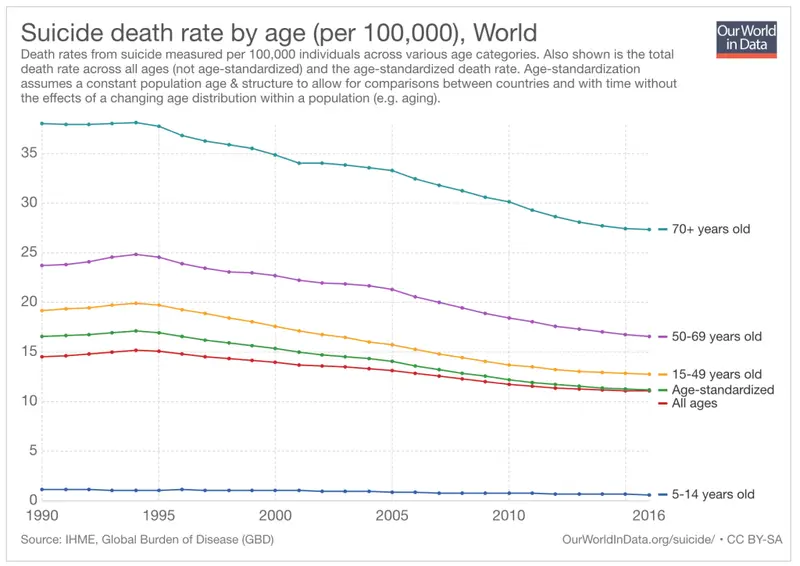
In reality, suicide death rates are the lowest they have even been since 1990:
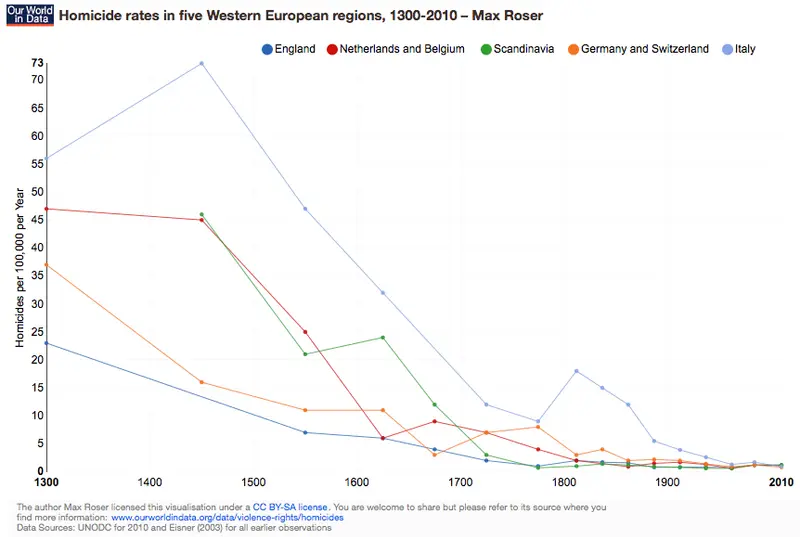
In reality, homicide rates are the lowest they have ever been in the history of humankind:
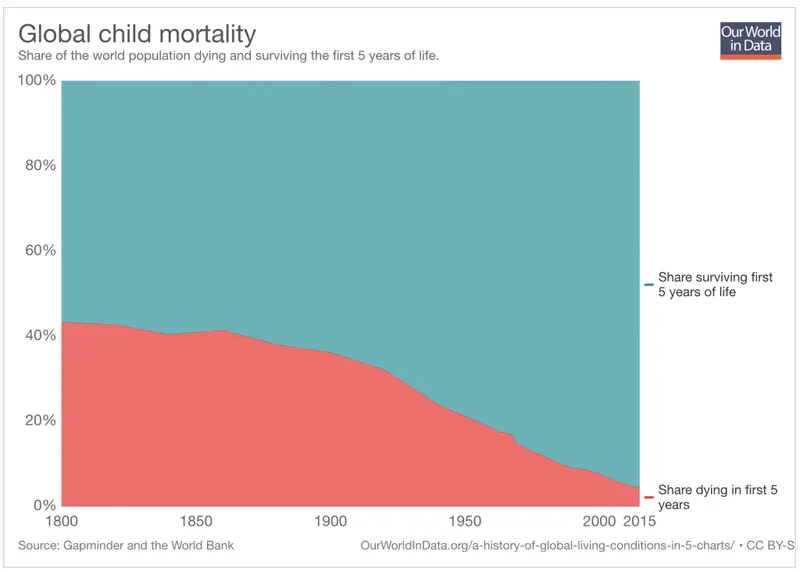
In reality, child mortality rates have fallen to their lowest level ever:
However you look at it, the state of humanity is improving, and most of us have no sense of this progress. Canadian-American thinker Steven Pinker makes this point in his book Enlightenment Now, and in this interview:
Big problems do remain, and there is no reason to become complacent. Accomplishing the fastest reduction in child mortality is a tremendous achievement, but the fact that one out of 13 children still die under the age of 5 today is unacceptable.
Why does it matter that the world is better than ever? Because most people think it isn’t. And for our history to be a source of encouragement we have to know our history, which is why the story that we tell ourselves about our history does matter.
Our hopes and efforts for building a better future are inextricably linked to our perception of the past. A positive lookout on the efforts of ourselves and our fellow citizens are a vital condition to creating a better future. We need to know that we have come a long way in improving living conditions and our quality of life, because knowing that our work is worthwhile is a necessary condition for self-improvement.